European Commission puts draft provisions for certifying enhanced rock weathering to expert group
BRUSSELS, NOVEMBER 18, 2026
The European debate on enhanced rock weathering (ERW) has moved from whether the pathway should be certified to how. On November 10, the European Commission presented its Carbon Removals Expert Group with draft provisions that could form the starting point for an ERW methodology under the Carbon Removals and Carbon Farming Certification Framework (CRCF), and opened a written feedback round that runs until December 10, 2026. No Member State objected to continuing the work, and Germany pointed to ERW projects already operating on German farmland and selling removals on the voluntary carbon market. The discussion, including the contributions of the pathway’s most demanding reviewers, centered on how a methodology should be designed.
Eight ERW developers (Carbony, InPlanet, Lithos Carbon, MATI, Rock Flour Company, Terradot, UNDO and ZeroEx) welcomed the outcome. Ahead of the meeting, they submitted a joint technical response to the issues paper prepared for the Commission by ICF, in association with Cerulogy and Ecodiversity. The response sets out shared positions on the paper’s central questions.
“The conversation in Brussels is no longer about whether enhanced rock weathering belongs in Europe’s certification framework. It is about how to write the rules well,” said Jim Mann, CEO and Founder, UNDO, United Kingdom. “That is exactly the debate we should be having, and we are coming to it with data.”
The open questions are the right ones
Discussion centered on four design questions: validation across measurement routes, permanence, feedstock risk management, and the division of detail between the EU methodology and certification schemes. These are the questions a workable methodology has to answer, and the signatories are bringing evidence to each one.
The developers welcome that scrutiny. A methodology that has been tested this hard before adoption is one that farmers, buyers and Member States can rely on afterward. Before December 10, the signatories will submit field data and published evidence on each question, working with independent scientists, and will propose workable solutions the Commission can build on.
“Rigorous measurement is what this industry stands on,” said Tony Oehm, CEO and Co-Founder, ZeroEx, Germany. “We have been building enhanced rock weathering projects in Germany since 2023. For these and other projects to become one of the pillars of European carbon removal, a shared standard is needed. The CRCF is the key to that, and we will contribute our existing field data to the process.”
A unified ERW industry position
The signatories are members of the Enhanced Weathering Alliance, an industry coalition bringing together leading organizations committed to advancing ERW as a carbon removal solution. The joint response reflects a strong consensus among developers on how baselines and control plots are set, the point at which removals are credited, the conservative treatment of uncertainty and downstream losses, and safeguards for soil and water quality. The signatories also support rigorous feedstock testing, soil monitoring and cumulative loading limits assessed against soil protection thresholds. They have committed to sharing data that is not commercially sensitive with researchers and to working with the Commission and certification schemes on the remaining scientific questions.
“Safety for soils and water is not negotiable,” said Silyan Ivanov, CTO, Carbony, Austria. “The way to secure it is to measure what goes onto a field and what is already in it, and to cap the total. We support feedstock testing, soil monitoring and loading limits built on the soil protection rules Member States already apply.”
Why it matters for Europe
The European Climate Law requires a 90 percent net reduction in emissions by 2040, leaving a residual gap that carbon removals must close. The CRCF is the Union’s quality benchmark for certified removals, and an ERW methodology would give European farmers, buyers and Member States a common standard for a pathway that can be deployed on existing cropland with domestic rock.
“Europe will not reach its 2040 target on one or two removal pathways,” said Felix Harteneck, CEO and Co-Founder, InPlanet, Germany. “Enhanced rock weathering works on existing farmland, with existing equipment and European rock, and it leaves farmers with better soils. A CRCF methodology turns that into a standard that buyers and Member States can trust.”
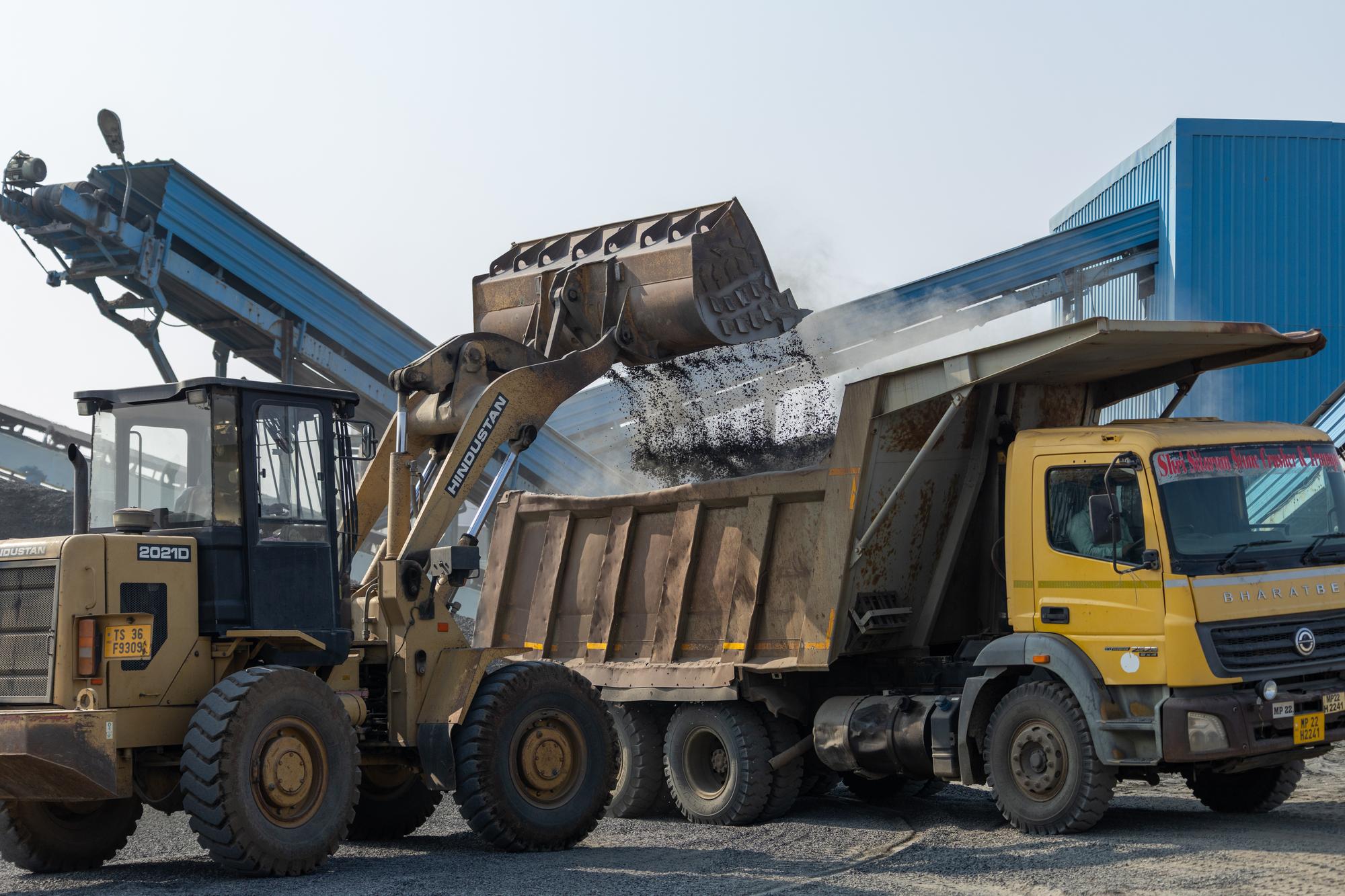
ERW accelerates a natural geological process. Finely crushed silicate rock, often a by-product of existing quarrying, is spread on farmland with the same equipment used for liming. There it reacts with CO2 and converts it into bicarbonate and carbonate minerals that are stable for thousands of years. Published estimates put the removal potential on EU agricultural land at 34 to 100 million tonnes of CO2 a year (Renforth, 2025), alongside benefits for farmers such as healthier, less acidic soils and lower dependence on imported fertilizers. Verified ERW removals have already been issued by independent registries and delivered to corporate buyers, with projects operating in Europe, Brazil, India, Africa and North America.
“Whatever Europe decides on enhanced rock weathering will become the global benchmark,” said Tom Mills, Head of Policy, MATI, United States and India. “Soil remineralization can raise incomes for the smallholder farmers in India and Africa that we work with, but only if the carbon market is built on rigorous science and strong safeguards. A strong CRCF methodology can set that standard for the rest of the world.”
What happens next
The Commission’s written feedback round closes on December 10, 2026. The signatories will submit their evidence ahead of that date and are asking the Commission to set out an indicative timeline for the methodology and the evidence it needs to proceed, so that field programs and independent research can be aimed at the right questions. They will continue to engage with Member States, certification schemes and the scientific community.
“Through an ERW CRCF methodology, Europe has the opportunity to establish a robust framework that recognizes the full potential of ERW while setting rigorous standards for measurement, monitoring, environmental safeguards and verification,” said James Kanoff, CEO and Co-Founder, Terradot, United States. “This is essential to ensuring that scientific innovation translates into measurable climate impact. We are ready to contribute our operational experience and scientific evidence to make this happen in Europe.”
Notes to editors
About the CRCF. Regulation (EU) 2024/3012 establishes a voluntary Union certification framework for permanent carbon removals, carbon farming and carbon storage in products. Certification methodologies are adopted by the Commission as delegated acts. Delegated Regulation (EU) 2026/285, adopted on February 3, 2026, established the first three methodologies, for direct air capture with carbon storage (DACCS), biogenic emissions capture with carbon storage (BioCCS) and biochar carbon removal (BCR), and has been in force since May 7, 2026. Carbon farming methodologies for agriculture and agroforestry on mineral soils, rewetting and restoration of peatlands and other organic soils, and afforestation followed in July 2026, bringing the number of adopted methodologies to six. The Commission’s Carbon Removals Expert Group advises on the development of further methodologies.
About enhanced rock weathering. Silicate rocks such as basalt react naturally with CO2 and water. Grinding the rock and applying it to biologically active soils speeds the reaction from millennia to years. The resulting bicarbonate drains to rivers and the ocean, or forms carbonate minerals in soil, where the carbon is stable over geological timescales. Removals are quantified through the chemistry of the rock, the soil and the drainage water, with conservative deductions for losses.
About the signatories
Carbony (Austria). Operating across Austria and Bulgaria, Carbony advances enhanced rock weathering through pioneering basalt deployments in Austrian forests and the EU’s first commercial-scale deployment of olivine, a high-performance carbon removal mineral, on Bulgarian farmland. https://www.carbony.earth
InPlanet GmbH (Germany). Founded in Germany and operating across Brazil, InPlanet pioneered enhanced rock weathering in the tropics. It was the first company to deliver independently verified ERW credits, which carry BeZero Carbon’s “A” rating, among the highest in the carbon removal market. https://www.inplanet.earth
Lithos Carbon (United States). Lithos Carbon is a US company that spreads basalt on American farmland. In December 2023, it signed the world’s first enhanced weathering offtake agreements with Frontier buyers. https://www.lithoscarbon.com
MATI (United States and India). MATI raises incomes by removing carbon on smallholder fields in Africa and Asia, and farmers pay nothing. It has delivered credits under Isometric and Puro.earth, holds a BeZero “AA” pre-rating and won the US$50M XPRIZE Carbon Removal Grand Prize. https://mati.earth
Rock Flour Company (Denmark). Rock Flour Company, co-founded in 2023 by Professor Minik Rosing, holds exclusive rights to more than three billion tonnes of Greenlandic glacial rock flour, a silicate ground so fine by the ice sheet that it needs no energy-intensive processing. https://www.rockflour.co
Terradot (United States). Terradot is a global ERW platform founded out of Stanford University in 2022. It operates large-scale projects in Brazil and the United States, with credits issued under both Isometric and Puro.earth, and is backed by a science team of 20+ PhDs focused on the measurement and verification that make ERW removals credible at scale. https://terradot.earth
UNDO (United Kingdom). UNDO is a UK company, an XPRIZE Carbon Removal runner-up and Earthshot Prize nominee, that spreads quarry by-product basalt on British farmland and fast-weathering wollastonite in Canada. https://un-do.com
ZeroEx (Germany). ZeroEx is the EU’s first enhanced rock weathering developer and has paired basalt from the Vulkaneifel region in Germany with local farms since 2023. In Brazil, the company partners with the multinational mining company Anglo American to build large-scale projects using mining by-products. https://zeroex.com
The Enhanced Weathering Alliance (EWA). Is a coalition that brings together leading organizations in the pursuit of advancing enhanced weathering for carbon removal. https://erw.info/
MEDIA CONTACTSMATI Press Contact:Adam Werbachpr@maticarbon.com+1 510-560-6731
InPlanet Press ContactMaria de Freitaspress@inplanet.earth